AI Agents Are Getting Cheaper. Verifying What They Do Is Getting Harder.
The team at @abacusai open-sourced a swarm architecture where Anthropic's Opus 4.7 and OpenAI's GPT-5.5 handle agent planning while cheaper models from Deepseek and Google DeepMind do the execution, resulting in what they claim is a 10x cost reduction on parallel agentic tasks.
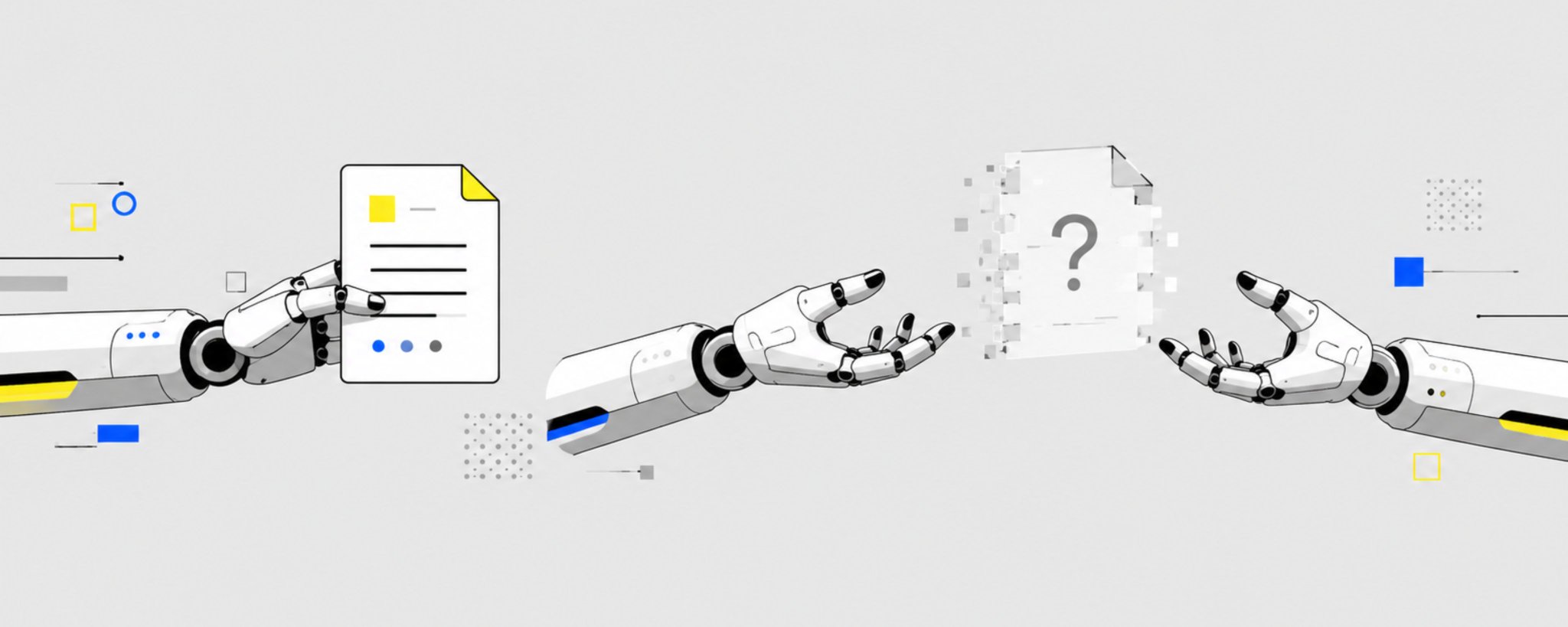
But this approach comes with serious tradeoffs. When Opus sets the rules for a task and hands off to Deepseek for execution, there's no mechanism that forces Deepseek to honor those same constraints. Each model operates under its own provider's rules. When the task touches four models and a dozen tools, there's no standard way to attribute credit across them. And when the whole thing runs unattended for hours or days, there's no checkpoint catching it if the work drifts outside what was originally intended.
Token billing has made every architectural decision about an agent a cost decision, and that's changed who gets to make the tradeoffs. But the teams optimizing purely for cost are designing systems where the economics work and the accountability doesn't.
Cheaper swarms mean more handoffs. More handoffs mean more places for things to break.
A question circulating in agent infrastructure discussions recently cuts to the real unit of measurement.
Can an agent stay coherent over a billion-token budget, building something as complex as Slack from scratch?
That's a different unit of measurement than accuracy on a single task. It assumes continuous operation, accumulating context, and sustained coherence across an entire run.
OpenAI's next model, GPT-5.6, has been spotted in Codex backend logs and its chief scientist has called it a meaningful improvement over GPT-5.5. The model however has slipped past its expected release window, with prediction markets now pricing a July launch. The reported spec includes a 1.5M token context window, though none of this has been officially confirmed. Longer context means the planner can hold more of the task in view before things fall apart. That's useful. But a bigger context window doesn't change what happens at the handoff points between models, and it doesn't create an attribution layer that didn't exist before. It just means the run is longer, which means there are more handoffs, more tools touched, and a larger surface area where the accountability gaps compound.
The cost and context improvements matter. They make these systems more capable but they don't necessarily make them easier to govern.
At every cross-provider handoff, intent, policy, and attribution are all at risk
The architecture @bindureddy described assumes the frontier planner sets the direction and cheaper models execute against it. That division of labor makes sense on cost, but it creates a structural problem on policy.
Opus and GPT-5.5 operate under Anthropic and OpenAI's usage policies respectively. DeepSeek and Google DeepMind's models operate under theirs. When the planner sets constraints for a task and hands work to an execution model from a different provider, those constraints don't travel with the handoff. There's no cross-provider enforcement layer. The execution model doesn't know what the planner intended beyond what's in the prompt, and a prompt isn't a policy.
Intent set by the planner has to govern the full run end to end. No cross-provider standard exists yet to enforce that.What happens next
The shift from model quality to orchestration economics is accelerating. Every capability announcement this week came with an immediate cost qualifier. Capability alone no longer closes the deal in production.
Missing from all of it is a layer that makes multi-model systems trustworthy at scale. Verifiable execution so you know what actually ran. Enforceable usage policies that survive handoffs across providers. Automatic value attribution across every model and tool that contributed to an outcome. None of that is a theoretical concern once these systems are running unattended on real tasks for real users.
As multi-model architectures become the default cost-optimization strategy, the infrastructure primitives that don't exist yet aren't just a nice-to-have anymore. They're what determines whether these systems can run on anything that actually matters. And right now nobody has standardized them.
That's the infrastructure problem Sahara AI is building to close.
Follow Sahara AI for analysis of agent infrastructure, the AI economy, and where the real building is happening.
About Sahara AI: Sahara AI is the agentic AI company dedicated to making AI more accessible and equitable. We build the core protocols, infrastructure, and applications that let personal agents anticipate and execute on your behalf. For this to work, infrastructure has to be trustworthy: verifiable execution, enforceable usage policies, and automatic value distribution across every tool, model, and service an agent touches. Sahara is building a growing suite of agent-powered applications on top of this foundation, including Sorin, your personal agent for global digital markets. Our solutions currently power AI agents and high-quality data for consumers, Fortune 500 enterprises, and leading research labs, including Microsoft, Amazon, MIT, Motherson, and Snap.